Have you ever wondered why certain bathroom remodels seem effortless while others stretch out and blow past the budget? A successful renovation depends on clear goals, thoughtful design, and tight coordination. Before meeting a designer or contractor, collect inspiration from Pinterest, Houzz, Magnolia Journal, and Architectural Digest. Bring photos, magazine clippings, and a simple scrapbook so choices about finishes and fixtures stay clear.
Explore Bathroom Renovation Services in Bellevue, WA
Designers create floor plans and 3D renderings to save time and cut down on costly changes. The planning and selection phase often takes a month or two. The build phase usually lasts three to eight weeks. Because early decisions shape the scope, cost, and timeline, decide whether you want better function, updated looks, or accessibility upgrades.
Practical choices make a big difference: choose slip-resistant mosaic tiles for shower floors, plan layered lighting on dimmers, add recessed niches, and buy tiles in one lot with 10–15% overage. Reglazing a tub can be a cost-saving alternative to replacement. Follow this Bathroom Remodeling Guide to organize bathroom renovation tips and follow step-by-step bathroom remodeling practices that keep your project on track.
Important Takeaways
- Bring together bathroom inspiration in advance so your designer clearly understands your goals.
- Designer-created renderings and floor plans streamline decisions and minimize unexpected issues.
- Plan for a design phase that takes weeks and a build phase of roughly three to eight weeks for most remodels.
- Choose practical materials—mosaic shower floors, layered lighting, and proper paint.
- Order all tile in one batch with 10–15% overage and consider tub reglazing as a money-saving option.
Planning Your Bathroom Remodel: Goals, Scope, And Project Timeline
Begin by listing your preferences for cabinets, sinks, counters, and flooring. Also consider plumbing fixtures, hardware, lighting, windows, backsplash, heated floors, smart home technology, and cabinet organizers. Save images and notes in a project folder or on platforms like Pinterest and Houzz. Doing this helps you explain your vision clearly during the initial meeting.
Clarify your renovation goals and priorities
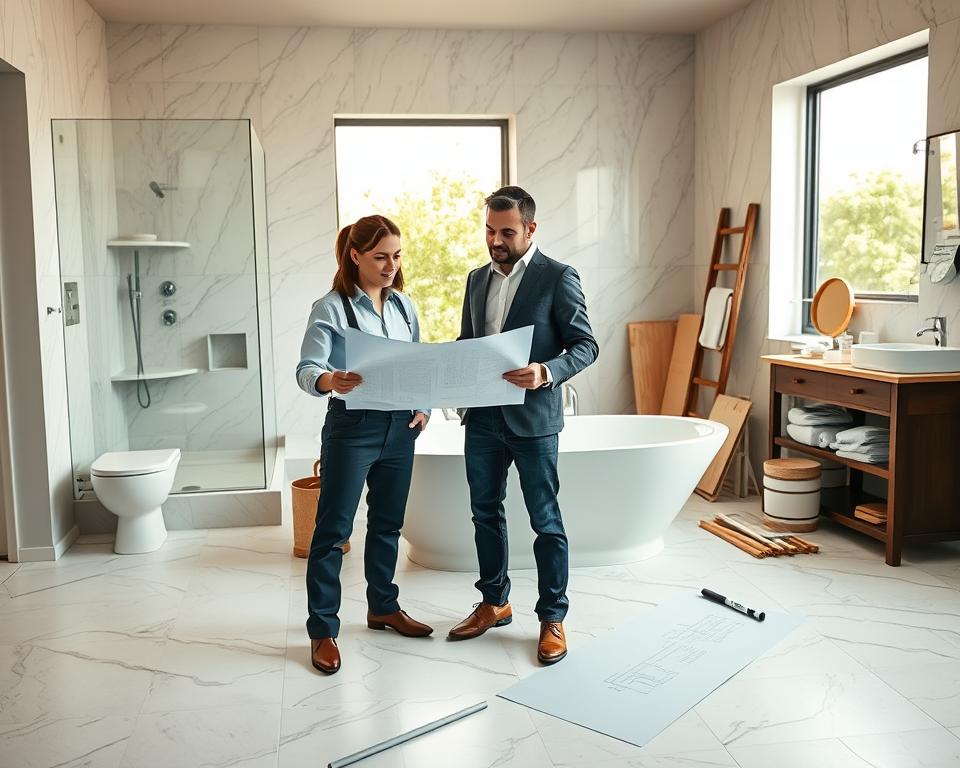
Decide whether your main goal is to improve functionality, update aesthetics, or increase resale value. Determine essential needs like more storage, better lighting, accessible fixtures, or a larger shower. Present these priorities with the designer. They can then create 3D renderings and a detailed floor plan that fits your household’s needs and accessibility requirements.
Determine the scope: complete remodel versus partial refresh
Choose a full remodel if major layout changes or new plumbing lines are needed. Consider a partial update if you want to refresh finishes and fixtures without major disruption. Keep in mind that moving plumbing can raise costs significantly and extend the renovation timeline.
Typical timelines for bathroom renovations
Planning and selecting materials can take several weeks to a few months. The actual construction phase usually lasts three to eight weeks for most projects. More complex layouts, custom cabinetry, or specialty tile can push the schedule beyond the average.
Permits, inspections, and code considerations
Research city and county requirements early to avoid delays. Permits and inspections can add time to the overall schedule. Make sure all mechanical, electrical, and plumbing work complies with local codes to prevent construction hold-ups.
When to contact Renovate Builders for a consultation
Contact Renovate Builders if you want a single team to oversee design, permits, suppliers, and construction. A design-build company handling the entire process can provide accurate estimates, coordinate trades, and offer renderings that help you picture the finished space.
Bathroom Remodel Planning Guide
Start by collecting ideas that fit your style and needs. Pinterest and Houzz are useful for pinning photos and organizing them by room. That helps you build boards for sinks, showers, and tile patterns. Bring a small scrapbook to appointments with magazine clippings, paint swatches, and fabric samples. This helps designers understand your real preferences, making communication clearer and decisions faster.
Collecting inspiration
Explore magazines and online portfolios for bathroom makeover ideas. Organize your research into labeled folders for lighting, vanities, and shower layouts. Present these folders to designers so your desired look is easier to understand. This step turns a vague concept into concrete bathroom design ideas.
Lifestyle and accessibility planning
Consider how you use the space now and how you may use it ten years from now. Include aging-in-place bathroom features like curbless showers and wider doorways for future mobility. Low counters, pullout shelves, and lever handles can also make everyday tasks easier for everyone. These features affect both cost and layout.
Layout choices and plumbing impact
Existing plumbing has a major effect on the budget. Moving fixtures such as toilets, tubs, or showers can quickly increase costs. Keeping the layout intact saves money and shortens the timeline. Discussing the scope with your designer helps you weigh a partial update against a full remodel based on your house size and goals.
Benefits of a design-build approach
A design-build team handles design and construction under one roof, which streamlines the process. They create 3D renderings, source materials, and provide cost options. Centralized project management reduces homeowner time commitment and scheduling conflicts. This method often improves quality and keeps the job on track.
| Phase | What to Prepare | Why It Helps |
|---|---|---|
| Inspiration | Pinterest boards, Houzz saves, magazine clippings | Clarifies style, speeds design decisions |
| Accessibility Review | Daily-use needs list, future mobility considerations | Helps ensure aging-in-place bathroom features are built into the plan |
| Layout Review | Pictures of current plumbing, existing floor plan | Identifies cost drivers and savings from keeping layout |
| Design-Build Consultation | Budget range, target timeline, material preferences | Helps create an integrated plan with staging and supplier options |
Budgeting And Cost-Saving Bathroom Remodel Strategies
Setting a clear budget is the first step in any cost-effective bathroom remodel. Break costs into labor, materials, permits, and a contingency line. Designers often provide three estimate tiers—good, better, and best—to match priorities and help control spending.
Creating A Realistic Budget Around Your Project Scope
Decide whether you need a full overhaul or a partial update. A partial project keeps the plumbing and layout the same, which lowers labor costs. Include supplier lead times in your plan so material delays do not inflate the final bill.
Typical Cost Ranges: Basic, Mid-Range, And Luxury Projects
Basic renovations usually cost $10,000–$15,000 when you avoid major layout changes. Mid-range projects often fall in the $20,000–$30,000 range and may include moving fixtures plus adding heated towel rails or wall tile. High-end work starts at $30,000 and can climb higher for luxury stone, smart technology, and custom carpentry. These typical bathroom remodel cost ranges vary by region and bathroom size.
Money-Saving Tips: Preserve The Layout, Reglaze Tubs, Choose One Statement Fixture
Keeping the current layout cuts plumbing and labor costs dramatically. Reglazing a tub can save thousands compared with installing a new freestanding model. Pick one statement fixture, such as a designer vanity or premium faucet, and keep other fittings modest to create an upscale feel at a lower cost.
Contingency Planning For Unforeseen Issues (Hidden Plumbing, Wiring)
Reserve 10–20% of the budget for surprises uncovered during demolition. Hidden plumbing, outdated wiring, or structural repairs can increase costs quickly. Early inspections and opening small access panels can help reduce guesswork.
Working With Professionals To Get Transparent Estimates And Avoid Low-Bid Scams
Work with licensed contractors who provide itemized estimates and clear timelines. A design-build firm can offer centralized estimates, supplier access, and project management that keeps the budget tighter. Beware of unusually low bids; they may involve shortcuts, missing insurance, or skipped permits.
| Project Tier | Usual Cost Range | Key Features | Cost-saving strategies |
|---|---|---|---|
| Basic | $10,000 to $15,000 | No layout changes, stock fixtures, standard tile | Keep layout, reglaze tub, paint existing vanity |
| Mid-Tier | $20,000–$30,000 | A few fixture relocations, mid-grade finishes, added comfort upgrades | Use a ready-made vanity with upgraded hardware and focus on one statement feature |
| Luxury | $30,000+ | Custom cabinetry, stone finishes, heated floors, smart fixtures | Buy from trusted suppliers, ask for bulk discounts, phase upgrades if needed |
Apply these bathroom renovation tips to stay on track. A careful plan and honest estimates make a budget-friendly bathroom renovation far more achievable without sacrificing quality.
Design And Materials: Bathroom Ideas And Finish Choices
Begin by aligning functionality with aesthetics. Choose practical bathroom design ideas that match your lifestyle and simplify everyday tasks. Create a layout that supports easy movement and puts storage where it is most useful near sinks and showers.
Choosing Durable Flooring And Slip-Resistant Options
Select bathroom flooring that can handle moisture and foot traffic. Porcelain and large-format natural stone are durable when sealed properly. In wet zones, mosaic shower floors or smaller tiles with more grout lines provide better traction.
Tile Selection Tips
Use tile selection tips for a more unified look. Choose larger tiles in spacious bathrooms and smaller tiles in compact spaces. Always buy tile from one lot and add 10–15% extra to avoid color variation and cover cuts or breakage.
Vanities And Bathroom Storage Ideas
Consider upgrading ready-made vanities with paint, new hardware, or replacement countertops to save money. Add cabinet organizers, drawer inserts, and linen towers. Wall-mounted units and corner cabinets can improve storage in tight bathrooms.
Fixtures, Lighting Layers, And Finishes
Select one standout fixture, such as a freestanding tub or unique faucet, and keep the rest simple. Make sure hardware finishes coordinate for a cohesive look. Install three layers of lighting: overhead lighting, vanity task lighting, and accent lights on dimmers for mood control.
Smart Bathroom Tech Options
Add smart features like digital showers, heated floors, and touch-control mirror cabinets. Include towel warmers with timers and smart toilets with bidet functions for added comfort and efficiency. Design-build teams can integrate these features more smoothly into the overall project.
- Durable bathroom flooring: porcelain, sealed stone, slip-resistant finishes.
- Tile selection guidance: choose the right tile size for the room, coordinate grout, purchase from one full lot.
- Smart bathroom technology: digital shower controls, heated flooring, touch-operated mirrors.
This part of the bathroom remodeling guide emphasizes durable materials and practical details for daily use. Choose finishes early to secure lead times and avoid batch mismatches during installation.
DIY Bathroom Remodel Versus Hiring The Best Bathroom Remodeling Contractors
Deciding between a DIY bathroom remodel and hiring professionals depends on your skills, available time, and comfort with risk. Small cosmetic updates can be rewarding for capable homeowners. But more complex work—such as plumbing, electrical changes, or waterproofing—should be handled by licensed professionals to avoid expensive mistakes.
A DIY approach can reduce labor expenses and bring personal satisfaction for smaller tasks. However, errors in tile, drains, or wiring can double the cost if a contractor later has to correct them. Only take on a DIY remodel if you truly have the experience for each trade and access to the proper tools.
How to vet contractors
To locate reliable contractors, check online reviews, ask for referrals, and verify licenses and insurance. Request a detailed schedule so you understand how the work will progress. Also ask for multiple cost options on fixtures and finishes to compare value more effectively.
What a project manager should provide
A professional project manager from a design-build firm oversees the job, secures permits, and keeps the schedule moving. Expect detailed renderings, assistance with material selection, and daily updates regarding dust control and site cleanliness. Make sure subcontractors are insured and that the manager enforces both safety and quality standards.
Questions to ask before hiring
- What is the timeline and the day-by-day schedule?
- Who will the subcontractors be, and do they carry insurance?
- How do you plan to manage dust and site containment?
- What contingency plan is in place for hidden plumbing or structural issues?
- How will change orders be documented and billed?
Why hire a full-service remodeling company
Choosing a top bathroom remodeling contractor reduces stress by handling design, permits, materials, scheduling, and construction. Renovate Builders offers design-build services with clear estimates, 3D renderings, and online schedules. This method helps the project stay on time and on budget while avoiding common renovation pitfalls.
| Decision Factor | DIY Bathroom Remodel | Best Bathroom Remodeling Contractors |
|---|---|---|
| Cost | Lower upfront for small jobs; risk of higher total if mistakes occur | Higher labor expense, but clearer total pricing and warranty coverage |
| Project Time | Flexible timing, though often slower because of the learning curve | Predictable schedule with day-by-day timeline |
| Project Risk | Higher for plumbing, electrical, waterproofing | Lower when you vet contractors and confirm insurance |
| Quality control | Varies by homeowner skill | Managed by a project manager with subcontractor oversight |
| Design And Material Selection | Limited to homeowner research and taste | Design guidance, 3D renderings, and curated supplier access |
| Permits And Inspections | Homeowner must handle local codes and filings | The contractor usually handles permits and inspection scheduling |
Practical Construction Tips And Avoiding Common Mistakes
Start with a detailed plan that connects design choices with practical job-site realities. A well-prepared plan reduces surprises and helps plumbing and electrical work go more smoothly. This section of the bathroom remodeling guide focuses on site management, scheduling, and simple steps that prevent costly errors.
Electrical and outlet planning in modern bathrooms
Map outlet locations for smart toilets, bidets, and vanity power. Position low outlets for grooming stations and place a GFCI near wet areas. Use dimmers and layered lighting circuits for task, ambient, and night lighting. Put exhaust fans where moisture builds up and consider recessed exhaust-light combinations for both airflow and illumination.
Shower niches, recessed ledges, and separating wet and dry zones
Plan shower niche placement early during framing. Make sure the niche height allows easy access to bottles and does not interrupt waterproofing seams. Keep sinks and vanities outside the splash zone to protect finishes. Use recessed ledges with a slight slope so water drains back toward the shower.
Waterproofing details, tile base perimeter, and paint for wet spaces
Install a continuous waterproof membrane up the walls several inches above the floor and throughout shower walls. Use tile base perimeter trim as a durable, water-resistant finish that protects drywall edges. Choose mold-resistant, wet-rated paint with an appropriate sheen for ceilings and non-tiled walls to reduce moisture damage.
Storage, hooks, and circulation: avoid tight spacing errors
Check clearances for doors, vanities, and tubs before purchasing fixtures. Avoid oversized tubs that reduce walking space. Make sure cabinet heights are comfortable and allow proper door swing plus 30–36 inches of circulation in main pathways. Place hooks for towels and robes near shower exits and on doors to cut down on clutter.
Ordering materials: overage amounts and batch matching
Order tiles and finishes from the same production lot to prevent noticeable color differences. Add 10–15% overage for cuts, breakage, and pattern repeats. Confirm lead times with suppliers and let the design-build team coordinate deliveries to keep the schedule intact.
Here is a quick checklist to help you avoid common renovation mistakes during construction. Use it to guide trades and reduce delays in the field.
| What to Check | Why It Matters | Recommended Action |
|---|---|---|
| Outlet placement | Supports smart fixtures and grooming needs | Mark locations on plan; install GFCI and dedicated circuits |
| Shower niche location | Helps avoid waterproofing problems and improves bottle access | Frame the niche early and give the shelf a slight slope |
| Waterproof membrane continuity | Stops leaks behind tile and trim | Run membrane up walls and across tile base perimeter |
| Clearance and circulation | Avoids cramped layouts and user frustration | Check door swing clearance and maintain 30–36″ pathways |
| Matching material batches | Prevents color variation and supply delays | Order single lot; add 10–15% overage; confirm lead times |
Using these practical bathroom construction tips minimizes rework, saves money, and helps avoid common renovation mistakes. Review the checklist with your contractor to make this bathroom remodeling guide actionable on site.
Closing Thoughts
A successful bathroom renovation begins with clear goals, a realistic budget, and a well-defined scope. This guide emphasizes the value of planning ahead. Decide whether you need a full renovation or only a set of targeted updates. Remember to account for permits and allow about 3–8 weeks for the construction phase.
Using a design-build approach can simplify the process. It provides 3D renderings, coordinated material selection, and professional project management. This can reduce delays and mistakes, making the remodel smoother overall.
If you want a cost-conscious renovation, keep the layout simple and choose one standout fixture. Order tile in full batches with 10–15% overage. Practical details like traction-friendly flooring, layered lighting, and solid waterproofing improve both comfort and long-term performance.
Consider adding heated floors and towel warmers as high-value upgrades. These features increase daily comfort without introducing too much complexity.
Use a step-by-step remodeling process: set priorities, gather inspiration, and finalize finishes. Get clear estimates and prepare for unexpected problems. Choose contractors carefully by checking reviews, insurance, licenses, and scheduling practices.
Working with experienced designers and contractors can save time and money. It often leads to a better-quality result within your budget.
If you want a more hassle-free experience, consider a design-build firm. They handle design, sourcing, permits, and on-site coordination. With proper planning and trusted professionals, your remodel can balance style, function, and cost while adding lasting value and enjoyment.
Related: Contractors For Bathroom Remodeling Kirkland WA: Service Packages Explained